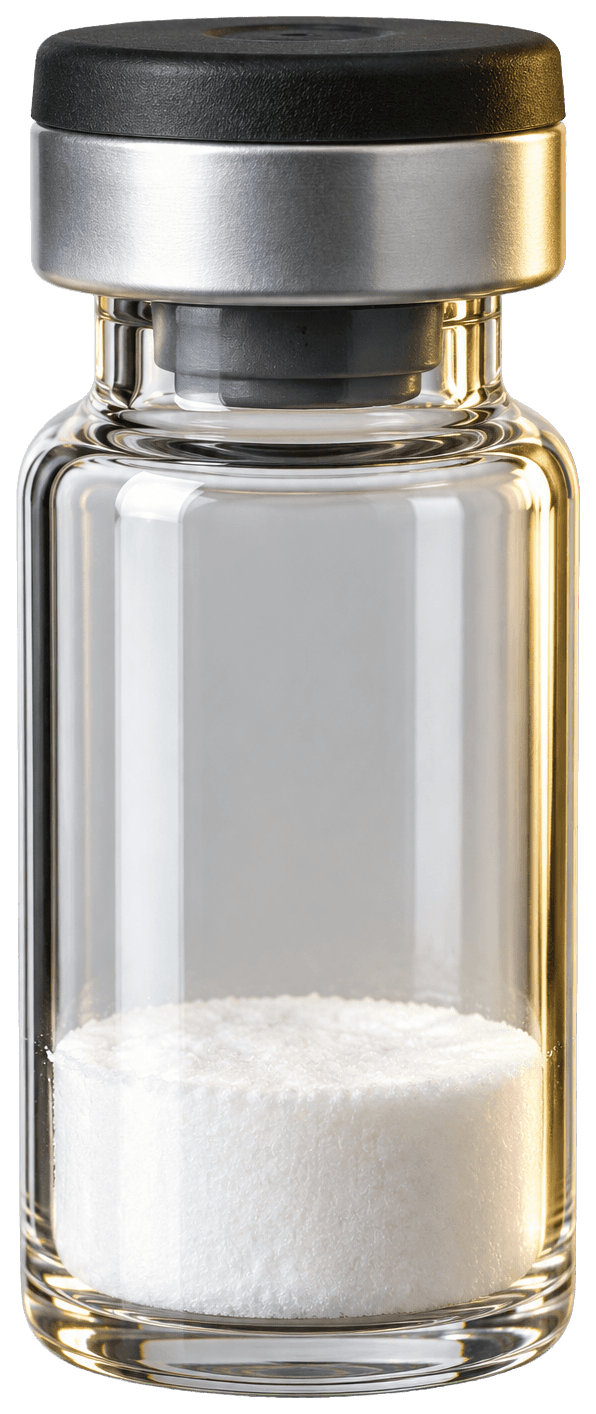
Ascorbic Acid
Vitamin C in an injectable vial. Researched for redox and collagen work.
Strength
This vial is priced on WhatsApp. Add it to your cart and we reply with the price. For research use only.
Watch
Unravelling life's secrets: Immunity, cancer and vitamin C
University of Otago - Ōtākou Whakaihu Waka
Professor Margreet Vissers' inaugural professorial lecture at the University of Otago on vitamin C, immunity and cancer.
Watch on YouTubePrecautions
FDA-approved only as ASCOR, for short-term scurvy; high-dose IV use for anything else is investigational, and the largest sepsis trial (LOVIT) found a higher risk of death or persistent organ dysfunction with vitamin C. G6PD deficiency risks severe haemolysis, and kidney impairment or oxalate stones risk oxalate nephropathy. Fast IV can cause faintness and nausea.
Show more
In the US, ascorbic acid injection is FDA-approved only as ASCOR, for short-term (up to 1 week) treatment of scurvy when oral administration is not possible, insufficient or contraindicated. Use of high-dose intravenous vitamin C for other purposes is investigational, and the largest sepsis trial (LOVIT) found a higher risk of death or persistent organ dysfunction with vitamin C than with placebo.
Reported adverse effects
- The ASCOR label lists pain and swelling at the infusion site as the most common adverse reactions.1
- The label states that rapid intravenous administration (>250 mg/minute) may cause temporary faintness or nausea, lethargy, flushing, dizziness and headache.1
- The label states that overdose may cause nausea, vomiting, diarrhea, facial flushing, rash, headache, fatigue or disturbed sleep.1
- Acute and chronic oxalate nephropathy have been reported with prolonged administration of high doses of ascorbic acid, and severe hemolysis has occurred in people with G6PD deficiency.1
- A scoping review of 74 studies (2,801 participants given high-dose IV vitamin C) found no consistent evidence of more harm than placebo in double-blind randomized trials, but also reported five cases of oxalate nephropathy, five of hypernatremia, three of hemolysis in G6PD deficiency, two of glucometer error and one of kidney stones.3
- In LOVIT (872 ICU patients with sepsis), the primary outcome of death or persistent organ dysfunction at day 28 occurred in 191 of 429 patients (44.5%) on vitamin C and 167 of 434 (38.5%) on placebo (risk ratio, 1.21; 95% CI, 1.04 to 1.40); one patient on vitamin C had a severe hypoglycemic episode and another a serious anaphylaxis event.6
- In a dose-finding phase I study in advanced cancer (0.4 to 1.5 g/kg three times weekly), adverse events and toxicity were minimal at all dose levels and no patient had an objective anticancer response.7
Who is at risk or should not use it
- The ASCOR label lists no contraindications, but warns that people with G6PD deficiency are at risk of severe hemolysis and advises monitoring hemoglobin and blood count and a reduced dose.1
- The label says people with renal impairment, a history of oxalate kidney stones, geriatric patients and children under 2 years of age may be at increased risk of oxalate nephropathy.1
- The label advises caution in people with renal oxalate stone risk or kidney problems, giving dialysis patients, diabetic nephropathy and renal transplant recipients as examples.1
- A scoping review of 45 papers (case reports of oxalate-associated renal failure) concluded that pre-existing renal dysfunction is a key risk factor for impaired clearance of large vitamin C doses.4
- A summary of 14 case reports of vitamin C-associated hemolysis found 71.4% of patients were diagnosed with G6PD deficiency, and half developed other complications including acute kidney injury, disseminated intravascular coagulation, oxalosis and methemoglobinemia.5
- For pregnant and lactating women the label says to follow the US Recommended Dietary Allowance when considering ASCOR for scurvy, and that there are no data on intravenous dosing in lactating women or on ASCOR in pregnant women.1
Interactions
- Ascorbic acid may decrease the activities of erythromycin, kanamycin, streptomycin, doxycycline and lincomycin, and bleomycin is inactivated in vitro by ascorbic acid.1
- Ascorbic acid may acidify the urine and lower serum concentrations of amphetamine, and may alter the excretion of other drugs affected by urine pH, such as fluphenazine.1
- Limited case reports suggested ascorbic acid may interfere with warfarin; the label says standard anticoagulation monitoring should continue.1
- Because ascorbic acid is a strong reducing agent, it can give inaccurate results (false negatives) for blood or urine glucose, nitrite, bilirubin and leukocytes if tested during or within 24 hours after infusion; the label says to delay such tests until 24 hours after infusion if possible.1
- Two cases of glucometer error were identified among the studies of high-dose IV vitamin C reviewed.3
- The label says not to mix ASCOR with solutions containing elemental compounds that can be reduced, for example copper.1
Monitoring and warning signs
- The label says to monitor renal function in patients at increased risk, and to discontinue ASCOR and treat if oxalate nephropathy develops.1
- The label says to monitor hemoglobin and blood count in G6PD deficiency and to discontinue if hemolysis is suspected.1
- The scoping review of harms concluded that reports of oxalate nephropathy, hypernatremia, glucometer error and hemolysis in G6PD deficiency warrant specific monitoring.3
- Renal function should be monitored both before and during high-dose vitamin C regimens.4
Stability and handling
- The label says to store ASCOR in a refrigerator at 2 to 8 C (36 to 46 F), protect it from light, and notes that it contains no preservative; excursions to ambient conditions for up to 30 days during storage or shipping are acceptable.1
- The label states that ASCOR is light sensitive and exposure to light should be minimized.1
- Before use, the diluted solution should be inspected for particulate matter and discoloration, and should appear colorless to pale yellow.1
- ASCOR is a pharmacy bulk package that may be penetrated only once; all dispensing must be completed within 4 hours, each dose must be used immediately and the unused portion discarded.1
- The label says the undiluted product has an osmolarity of approximately 5,900 mOsmol/L and must be diluted before use; the final infusion solution must be isotonic.1
- Vitamin C degradation generates oxalic acid, which has been implicated in oxalate-associated renal failure; the label also notes that a major route of ascorbic acid metabolism is conversion to urinary oxalate.4,1
Regulatory and sport status
- Drugs@FDA lists ASCOR (ascorbic acid), 25,000 MG/50 mL (500 MG/mL) solution for intravenous use, sponsor McGuff, with original approval on 10/02/2017.2
- The approved indication is short-term (up to 1 week) treatment of scurvy in adults and children 5 months and older when oral administration is not possible, insufficient or contraindicated; it is not indicated for vitamin C deficiency without signs and symptoms of scurvy.1
- The approved product is supplied as a 25,000 mg pharmacy bulk package; the largest recommended single dose is 200 mg and the label says not to give the entire contents of the vial to a single patient.1
- A 2026 systematic review concluded that evidence does not support routine use of high-dose IV vitamin C in sepsis, and that its role in oncology remains supportive and exploratory.9
- USADA states that intravenous infusions or injections of more than 100 mL within a 12-hour period are prohibited for athletes, in and out of competition, even when the substance is permitted (for example saline or vitamins), unless received during hospital or emergency treatment, surgery or a diagnostic procedure.8
Sources (9)
- 1.ASCOR (ascorbic acid injection), for intravenous use: prescribing information, McGuff Pharmaceuticals, Inc. via DailyMed (US National Library of Medicine) (2026)
- 2.Drugs@FDA: NDA 209112, ASCOR (ascorbic acid) injection, US Food and Drug Administration (2017)
- 3.Harm of IV High-Dose Vitamin C Therapy in Adult Patients: A Scoping Review, Critical Care Medicine (Yanase F, Fujii T et al.) (2020)
- 4.Are oral and intravenous vitamin C implicated in oxalate-associated renal failure? Exploring the role of pre-existing renal dysfunction, Nutrition Research (Carr AC, Gupta S) (2026)
- 5.Vitamin C-induced Hemolysis: Meta-summary and Review of Literature, Indian Journal of Critical Care Medicine (Juneja D, Jain R, Nasa P) (2022)
- 6.Intravenous Vitamin C in Adults with Sepsis in the Intensive Care Unit (LOVIT), New England Journal of Medicine (Lamontagne F, Masse MH et al.) (2022)
- 7.Phase I clinical trial of i.v. ascorbic acid in advanced malignancy, Annals of Oncology (Hoffer LJ, Levine M et al.) (2008)
- 8.IV Infusions (explanatory note), US Anti-Doping Agency (USADA) (2026)
- 9.Clinical benefits and risks of high-dose intravenous vitamin C: a systematic review, Journal of Medicine and Life (Alangari A, Arif J et al.) (2026)
Research
Start with these. Each paper links to its own page.
- Human trialNew England Journal of Medicine, 2022Intravenous Vitamin C in Adults with Sepsis in the Intensive Care Unit.
Lamontagne F, Masse MH et al.
In 872 ICU patients with sepsis on vasopressors, intravenous vitamin C was associated with a higher risk of death or persistent organ dysfunction at 28 days than placebo (44.5% vs 38.5%).
- Regulatory documentDailyMed, US National Library of Medicine (FDA-approved label), 2026ASCOR (ascorbic acid injection), for intravenous use: US prescribing information
McGuff Pharmaceuticals, Inc.
The FDA-approved label limits ASCOR to short-term (up to 1 week) treatment of scurvy when oral administration is not possible, lists oxalate nephropathy, hemolysis in G6PD deficiency and laboratory test interference as warnings, and is supplied as a 25,000 mg pharmacy bulk package that must be diluted and is not for direct administration to one patient.
Show more (8)
- Human trialAnnals of Internal Medicine, 2004Vitamin C pharmacokinetics: implications for oral and intravenous use.
Padayatty SJ, Sun H et al.
In 17 healthy volunteers, peak plasma vitamin C concentrations were higher after intravenous than oral doses, and the difference grew with dose, with oral vitamin C producing tightly controlled plasma concentrations.
- Human trialAnnals of Oncology, 2008Phase I clinical trial of i.v. ascorbic acid in advanced malignancy.
Hoffer LJ, Levine M et al.
In a dose-finding phase I study in advanced cancer, high-dose intravenous ascorbic acid was well tolerated with minimal adverse events but no patient had an objective anticancer response.
- Human trialScience Translational Medicine, 2014High-dose parenteral ascorbate enhanced chemosensitivity of ovarian cancer and reduced toxicity of chemotherapy.
Ma Y, Chapman J et al.
Combining laboratory and mouse work with phase I/II patient data, the authors report that parenteral ascorbate with carboplatin and paclitaxel inhibited ovarian cancer in mouse models and reduced chemotherapy-associated toxicity in patients, and call for larger trials.
- Human trialJAMA, 2019Effect of Vitamin C Infusion on Organ Failure and Biomarkers of Inflammation and Vascular Injury in Patients With Sepsis and Severe Acute Respiratory Failure: The CITRIS-ALI Randomized Clinical Trial.
Fowler AA 3rd, Truwit JD et al.
In 167 patients with sepsis and ARDS, a 96-hour vitamin C infusion did not significantly change organ dysfunction scores or markers of inflammation and vascular injury compared with placebo.
- ReviewFrontiers in Nutrition, 2023Effect of intravenous vitamin C on adult septic patients: a systematic review and meta-analysis.
Liang H, Mu Q et al.
Pooling 22 studies in 3,570 adults with sepsis, intravenous vitamin C did not improve 28-day mortality overall, with a possible mortality signal only in monotherapy subgroup analyses.
- ReviewCritical Care Medicine, 2020Harm of IV High-Dose Vitamin C Therapy in Adult Patients: A Scoping Review.
Yanase F, Fujii T et al.
Across 74 studies this scoping review found no consistent evidence that high-dose IV vitamin C was more harmful than placebo in double-blind trials, but reports of oxalate nephropathy, hypernatremia, glucometer error and hemolysis in G6PD deficiency warrant specific monitoring.
- ReviewNutrition Research, 2026Are oral and intravenous vitamin C implicated in oxalate-associated renal failure? Exploring the role of pre-existing renal dysfunction.
Carr AC, Gupta S
This scoping review of 45 papers (case reports) concluded that in most cases the renal failure could be attributed to the underlying disease or treatments, and that pre-existing renal dysfunction is a key risk factor, so renal function should be monitored before and during high-dose vitamin C.
- ReviewIndian Journal of Critical Care Medicine, 2022Vitamin C-induced Hemolysis: Meta-summary and Review of Literature.
Juneja D, Jain R et al.
A summary of 14 case reports found vitamin C-associated hemolysis, mostly in people with G6PD deficiency and often with intravenous doses, with half also developing complications such as acute kidney injury.
What it is
The reduced form of vitamin C. It donates electrons, so it works as an antioxidant, and it is a required cofactor for the enzymes that build collagen. Studied in redox biology, connective tissue and, at high intravenous concentrations, in critical illness and oncology trials.
Also called Vitamin C, L-ascorbic acid.
Researched as a redox cofactor and collagen-synthesis co-factor.
At a glance
- Vitamin C
- Vials of 500 mg and 5 g
- Not a peptide
- Priced on WhatsApp
- Not sold by weight
What researchers look at
Redox biology
Oxidative stress markers and the ascorbate and dehydroascorbate pair
Collagen synthesis
Prolyl and lysyl hydroxylase activity in connective-tissue models
High-dose intravenous trials
Organ failure scores, mortality and plasma ascorbate levels
Studied as an antioxidant and cofactor
Antioxidant activity
Cell and lab studiesRadical scavenging and the regeneration of other antioxidants are measured in cell models.
Collagen formation
Cell and lab studiesHydroxylation of proline and lysine in collagen is measured in connective-tissue models.
Critical-illness trials
Human studiesOrgan failure and mortality are the endpoints in intravenous vitamin C trials in sepsis.
Observation windows depend on the model, from hours in cell work to days in critical-care trials.
How it works
Ascorbate
The active form. It gives up electrons readily, which is why solutions oxidise and darken on standing.
Often paired with
Questions
What is Ascorbic Acid?
Vitamin C in an injectable vial. The reduced form of vitamin C. It donates electrons, so it works as an antioxidant, and it is a required cofactor for the enzymes that build collagen. Studied in redox biology, connective tissue and, at high intravenous concentrations, in critical illness and oncology trials.
What is Ascorbic Acid researched for?
Researched as a redox cofactor and collagen-synthesis co-factor.
Which strengths are there?
5 g vial (Price on WhatsApp), 500 mg vial (Price on WhatsApp). Prices are samples, confirmed on WhatsApp.
How does it come?
As a vial.
Is there a lab report?
No lab report is published for this product yet. The precautions and sources are on this page.
Is it for personal use?
No. It is sold for laboratory research only, not for human or veterinary use.