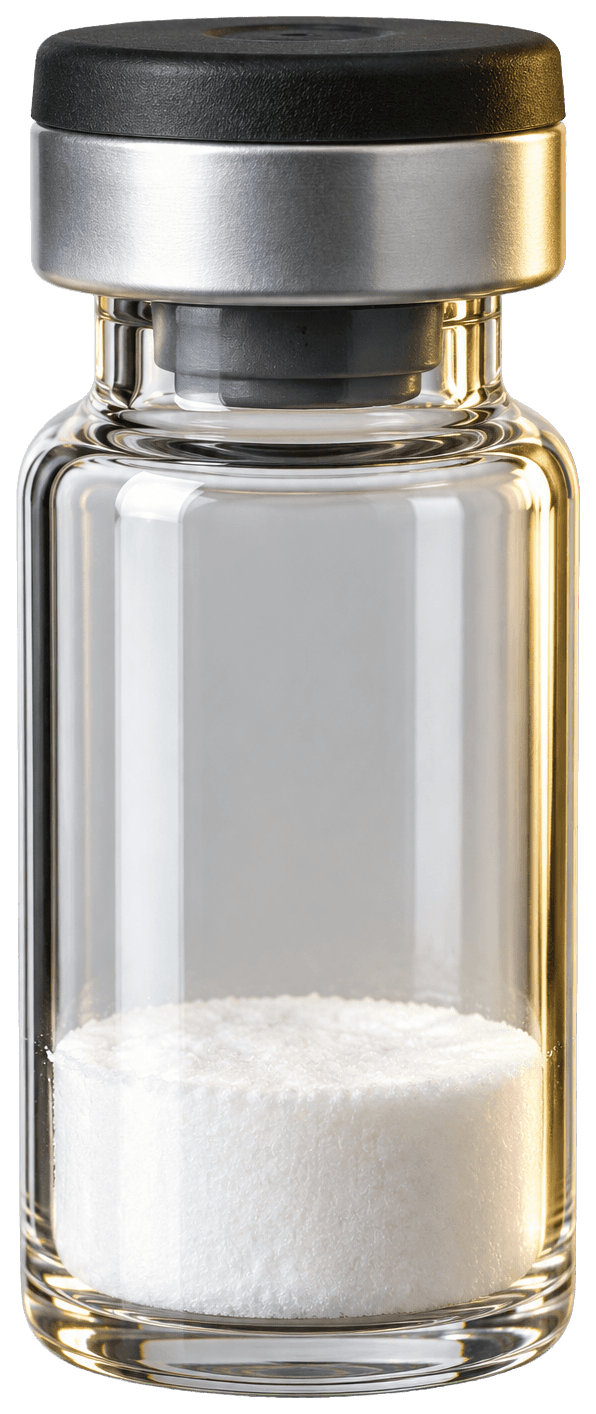
Bacteriostatic Water
0.9% benzyl alcohol sterile diluent. Researched for dilution.
Strength 10 ml
AED 40 per vial. Sample price, confirmed on WhatsApp. For research use only.
Watch
Check Your Steps! Make Every Injection Safe
OneandOnlyCampaign
Short video from the CDC-supported One & Only Campaign (Safe Injection Practices Coalition) explaining the difference between single-dose and multi-dose vials and how to use each safely.
Watch on YouTubePrecautions
A sterile diluent with 0.9% benzyl alcohol and no drug activity. Boxed warning: not for newborns, after a CDC report of 16 neonatal deaths linked to benzyl alcohol. Do not use it intravenously unless the mixture is about isotonic, and some drugs are incompatible with it. Some listings are unapproved.
Show more
Bacteriostatic Water for Injection USP is a sterile diluent (water with 0.9% or 1.1% benzyl alcohol as preservative) labelled only for dissolving or diluting drugs before injection; it has no drug activity of its own. The Hospira listing on DailyMed is marketed under an NDA, while at least one other DailyMed listing for the same product type is marketed as 'unapproved drug other'.
Reported adverse effects
- The US label carries a boxed warning that the product is not for use in neonates, because benzyl alcohol has been associated with toxicity in neonates.1,6
- The CDC MMWR report on neonatal benzyl alcohol deaths describes 16 deaths reported to the FDA by two medical centers, in preterm infants of about 2500 g with central catheters flushed daily with bacteriostatic saline containing 9 mg/ml benzyl alcohol. Findings were metabolic acidosis, then respiratory distress with gasping respirations, central nervous system dysfunction (including convulsions and intracranial hemorrhage), and late hypotension with cardiovascular collapse; estimated daily benzyl alcohol intake was 99 to 405 mg/kg/day.3
- The same MMWR report cautions that many of these findings also occur in seriously ill neonates from other causes, so attribution to benzyl alcohol needs comparison with infants given non-bacteriostatic solutions. The syndrome was named 'gasping syndrome' in a 1982 New England Journal of Medicine report by Gershanik et al.3,4
- The label states: 'Intravenous administration of Bacteriostatic Water for Injection without a solute may result in hemolysis.'1
- The label states that an estimated intravenous dose up to 30 mL may be safely given to an adult without toxic effects, while an estimated 9 mL given to a 6 kg infant or neonate is potentially capable of producing blood pressure changes.1
- The label lists febrile response, local tenderness, abscess, tissue necrosis or infection, venous thrombosis or phlebitis, and extravasation as possible adverse reactions, and says to stop the infusion if one occurs.1
- The UK product information warns that the preservative benzyl alcohol may cause hypersensitivity reactions.2
Who is at risk or should not use it
- Neonates: the US label says solutions containing benzyl alcohol must not be used in this group, and that only preservative-free Sterile Water for Injection should be used to prepare drugs for them. The UK product information is less absolute and says benzyl alcohol formulations should only be used in neonates if necessary.1,6,2
- Anyone with hypersensitivity to benzyl alcohol: this is the single contraindication in the UK product information.2
- The label says parenteral preparations containing benzyl alcohol should not be used in epidural or spinal anesthesia procedures, and should not be used for fluid replacement.6
- Pregnancy: the label states that animal reproduction studies have not been conducted with Bacteriostatic Water for Injection, so there is no reproductive safety data for the product itself.1
Interactions
- The label says some drugs are incompatible with this vehicle or with benzyl alcohol, and tells the user to check the drug manufacturer's instructions for the choice of vehicle, dilution and rate. Whether a given peptide or other solute tolerates benzyl alcohol is therefore a question for that solute's own documentation, not for this label.1
- The label says not to use the product for intravenous injection unless the additives make the admixture approximately isotonic.1
- The UK SmPC for a product supplied as a diluent for Caverject lists no indication other than serving as that diluent, and states no pharmacodynamic or pharmacokinetic properties for it.2
Monitoring and warning signs
- The label instructs that if an adverse reaction occurs, the infusion should be stopped, the patient evaluated, and the unused vehicle saved if possible.1
- The label says reconstituted drug should be inspected for clarity, precipitation and discoloration, and used only if the solution is clear and the seal is intact.1
- In the MMWR cases, onset came between several days and a few weeks of age, and hypotension leading to cardiovascular collapse was a late sign that usually preceded death.3
Stability and handling
- The label describes the product as supplied in a multiple-dose container from which repeated withdrawals may be made, stored at 20 to 25 C (68 to 77 F), with a pH of 5.7 (range 4.5 to 7.0).1
- Benzyl alcohol concentration differs by presentation. The Hospira label lists 9 mg/mL (0.9%) in a 30 mL plastic vial and 11 mg/mL (1.1%) in a 20 mL fill in a 30 mL glass vial, and the UK product states 9.45 mg/ml.1,2
- The label text we reviewed contains no discard-after-opening date. CDC guidance, attributing it to USP General Chapter 797, says multi-dose vials should be discarded within 28 days of opening unless the manufacturer states another date, and that any vial whose sterility is compromised or questionable should always be discarded.5,1
- The label says to mix thoroughly and use promptly when diluting or dissolving drugs, and not to store reconstituted solutions of drugs for injection unless the manufacturer of the solute directs otherwise.6
- The UK product information gives a 3 year shelf life for the unopened product and storage below 25 C.2
Regulatory and sport status
- The Hospira Bacteriostatic Water listing on DailyMed is marketed under NDA018802.7
- A DailyMed listing from Fujian Genohope Biotech for 30 mL multiple-dose Bacteriostatic Water vials is marketed as 'unapproved drug other' and carries the disclaimer 'This drug has not been found by FDA to be safe and effective.' Source and category of the vial matter when buying.8
- After the neonatal deaths, the FDA recommended that benzyl alcohol-containing intravascular flush solutions not be used for newborns, and that diluents with this preservative not be used to prepare medications for these infants.3
Sources (8)
- 1.Bacteriostatic Water for Injection, USP (Hospira) prescribing label, revised 08/2019 and 11/2019, Pfizer / Hospira (labeling.pfizer.com) (2019)
- 2.Bacteriostatic Water for Injection, Summary of Product Characteristics (diluent for Caverject), electronic medicines compendium (UK) (n/d)
- 3.Neonatal Deaths Associated With Use Of Benzyl Alcohol -- United States, CDC, MMWR (1982)
- 4.The gasping syndrome and benzyl alcohol poisoning (Gershanik J, Boecler B, Ensley H, McCloskey S, George W). N Engl J Med 1982;307(22):1384-8, PubMed / New England Journal of Medicine (1982)
- 5.Preventing Unsafe Injection Practices (multi-dose vial guidance), CDC (n/d)
- 6.Bacteriostatic Water for Injection, USP, 100 mL (Hospira, repackaged by Henry Schein) DailyMed label, revised 08/2019, DailyMed, US National Library of Medicine (2019)
- 7.Bacteriostatic Water injection, solution (Hospira) DailyMed listing, NDA018802, DailyMed, US National Library of Medicine (2026)
- 8.Bacteriostatic Water injection, solution (Fujian Genohope Biotech) DailyMed listing, DailyMed, US National Library of Medicine (n/d)
Research
Start with these. Each paper links to its own page.
- Observational studyNew England Journal of Medicine, 1982The gasping syndrome and benzyl alcohol poisoning.
Gershanik J, Boecler B et al.
Clinical report from neonatal intensive care describing the gasping syndrome in newborns and linking it to benzyl alcohol poisoning (the PubMed record has no abstract, so this summary follows the title).
- Regulatory documentDailyMed, US National Library of Medicine (label), 2026Bacteriostatic Water for Injection, USP (Hospira): prescribing information
Hospira, Inc.
The label describes a multiple-dose product with 0.9% (9 mg/mL) or 1.1% (11 mg/mL) benzyl alcohol, indicated only for diluting or dissolving drugs, contraindicated in neonates, and warns that intravenous administration without a solute may result in hemolysis.
Show more (6)
- Regulatory documentMMWR Morbidity and Mortality Weekly Report, 1982Neonatal deaths associated with use of benzyl alcohol--United States.
Centers for Disease Control (CDC)
Sixteen neonatal deaths were reported to the FDA by two medical centers in pre-term infants with central catheters flushed daily with bacteriostatic saline containing 9 mg/ml benzyl alcohol, and the FDA recommended that intravascular flush solutions containing benzyl alcohol not be used for newborns.
- Observational studyPediatrics, 1986Benzyl alcohol toxicity: impact on mortality and intraventricular hemorrhage among very low birth weight infants.
Hiller JL, Benda GI et al.
A before-and-after record review in one neonatal unit found that among infants under 1,000 g, mortality fell from 80.7% to 45.7% and grade III/IV intraventricular hemorrhage from 46% to 19% after benzyl alcohol-containing solutions were stopped.
- Observational studyPediatric Critical Care Medicine, 2009Exposure to the pharmaceutical excipients benzyl alcohol and propylene glycol among critically ill neonates.
Shehab N, Lewis CL et al.
In a retrospective study of one university hospital's neonatal and pediatric ICUs, neonates on continuous infusions had median cumulative benzyl alcohol exposure of 106.3 mg/kg/day, about 21 times the acceptable daily intake of 5 mg/kg/day.
- ReviewInternational Journal of Toxicology, 2001Final report on the safety assessment of Benzyl Alcohol, Benzoic Acid, and Sodium Benzoate.
Nair B
Reviews the safety data on benzyl alcohol, noting that it is metabolized to benzoic acid and excreted as hippuric acid, that the WHO acceptable daily intake is 5 mg/kg, and that no adverse effects were seen in chronic exposure studies in rats and mice.
- Observational studyAmerican Journal of Infection Control, 2004Bacterial contamination of multiple-dose vials: a prevalence study.
Mattner F, Gastmeier P
In a 1300-bed hospital survey of 227 opened multiple-dose vials, 1 vial and 1 spike were contaminated (0.9%), and only 50% of vials had the opening date marked.
- Regulatory documentCDC Injection Safety guidance, n.d.Preventing Unsafe Injection Practices (Injection Safety)
Centers for Disease Control and Prevention
CDC advises assigning multi-dose vials to a single patient whenever possible, dating opened vials and discarding them within 28 days (per USP 797) unless the manufacturer specifies otherwise, and discarding any vial whenever sterility is compromised or questionable.
What it is
Sterile water containing 0.9% benzyl alcohol as a bacteriostatic preservative, used as a laboratory diluent. Supplied as an accessory. Aura's peptides ship pre-filled and require no reconstitution.
Also called Bac water, BAC water.
Researched as a preserved laboratory diluent; Aura peptide pens arrive pre-filled and require no reconstitution.
At a glance
- 0.9% benzyl alcohol
- Sterile 10 ml vial
- Accessory, not a pen
- From AED 40 (sample price)
- Not sold by weight
What researchers look at
Laboratory dilution
Working concentration from a stock
Preserved sterile water
Bacteriostatic hold over repeated access
Laboratory dilution and preservation
Laboratory dilution
Cell and lab studiesSolvent volume and final concentration are measured in controlled preparation work.
Bacteriostatic preservation
Cell and lab studiesBenzyl-alcohol preservation is assessed through microbiological quality controls.
Controlled handling
Cell and lab studiesContainer integrity and laboratory storage conditions are tracked during use.
Use windows depend on the validated laboratory procedure and storage controls.
How it works
Benzyl alcohol, 0.9%
The bacteriostatic agent. Inhibits growth between accesses, which is what separates this from plain sterile water for injection.
Not needed for the pens
Every Aura peptide ships pre-filled. This is stocked for existing lyophilised material from other suppliers, not for anything in this catalogue.
Handling
- Store at room temperature, away from direct light.
- Not a peptide and carries no HPLC purity figure, it is a diluent.
- Supplied strictly for laboratory use. Not for human or veterinary use. 21+.
Often paired with
Questions
What is Bacteriostatic Water?
0.9% benzyl alcohol sterile diluent. Sterile water containing 0.9% benzyl alcohol as a bacteriostatic preservative, used as a laboratory diluent. Supplied as an accessory. Aura's peptides ship pre-filled and require no reconstitution.
What is Bacteriostatic Water researched for?
Researched as a preserved laboratory diluent; Aura peptide pens arrive pre-filled and require no reconstitution.
Which strengths are there?
10 ml vial (AED 40). Prices are samples, confirmed on WhatsApp.
How does it come?
As a vial.
Is there a lab report?
No lab report is published for this product yet. The precautions and sources are on this page.
Is it for personal use?
No. It is sold for laboratory research only, not for human or veterinary use.