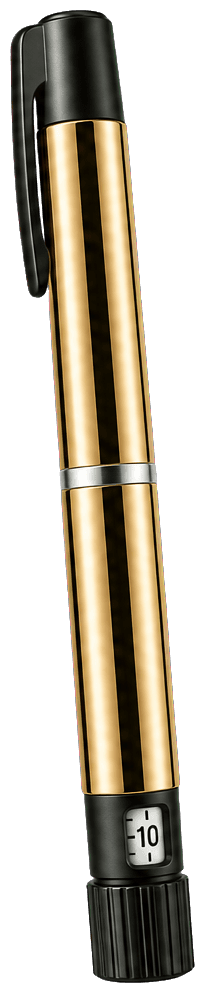
Tirzepatide
Dual GIP and GLP-1 receptor agonist. Researched for incretin signalling.
Strength 60 mg
PenGold
This pen is priced on WhatsApp. Add it to your cart and we reply with the price. For research use only.
Watch
Tirzepatide for Obesity and Diabetes Prevention | NEJM
NEJM Group
A short NEJM Quick Take video summarising longer-term findings of tirzepatide in adults with obesity and prediabetes.
Watch on YouTubeSurmount Press Briefing #ADA2022
American Diabetes Association
The American Diabetes Association press briefing from the ADA 2022 Scientific Sessions on the SURMOUNT tirzepatide obesity trial.
Watch on YouTubeEFL021 - Metabolic Effects of a Dual GIP and GLP-1 RA
Endocrine Society
An Endocrine Society podcast episode in which endocrinologists discuss a Journal of Clinical Endocrinology & Metabolism article on the effects of tirzepatide on lipid and metabolite profiles in type 2 diabetes.
Watch on YouTubePrecautions
Approved as Mounjaro and Zepbound, but research or compounded tirzepatide is not the approved product. Boxed warning: thyroid C-cell tumours in rats, and it is contraindicated with a personal or family history of medullary thyroid cancer or MEN 2. In the weight trials nausea reached 25 to 29% against 8% on placebo, with diarrhoea, vomiting and constipation.
Show more
Tirzepatide is FDA-approved as Mounjaro (type 2 diabetes, and reducing major cardiovascular events in adults with type 2 diabetes at high risk) and as Zepbound (weight reduction and moderate to severe obstructive sleep apnea in adults with obesity); the 60 mg pen is the 2.4 mL KwikPen holding four 15 mg weekly doses. The safety figures below come from the FDA labels revised 08/2026, and compounded or 'research' tirzepatide is not the approved product.
Reported adverse effects
- In the Mounjaro type 2 diabetes trials, the most common adverse reactions (reported in 5% or more of patients) were nausea, diarrhea, decreased appetite, vomiting, constipation, dyspepsia and abdominal pain. In the placebo-controlled pool, nausea occurred in 12%, 15% and 18% of patients on 5 mg, 10 mg and 15 mg versus 4% on placebo, and diarrhea in 12%, 13% and 17% versus 9%.1
- In the pooled Zepbound weight-reduction trials (Studies 1 and 2), nausea occurred in 25%, 29% and 28% of patients on 5 mg, 10 mg and 15 mg versus 8% on placebo; diarrhea in 19%, 21% and 23% versus 8%; vomiting in 8%, 11% and 13% versus 2%; and constipation in 17%, 14% and 11% versus 5%.2
- Gastrointestinal adverse reactions occurred in 56% of patients at each Zepbound dose versus 30% on placebo, and 1.9%, 3.3% and 4.3% of patients on 5 mg, 10 mg and 15 mg discontinued because of them versus 0.5% on placebo. The label says most nausea, vomiting and diarrhea occurred during dose escalation and decreased over time.2
- Across both weight-reduction trials, 4.8%, 6.3% and 6.7% of patients on 5 mg, 10 mg and 15 mg permanently discontinued treatment because of adverse reactions, versus 3.4% on placebo.2
- Severe gastrointestinal adverse reactions were reported in 1.7%, 2.5% and 3.1% of Zepbound patients (5 mg, 10 mg, 15 mg) versus 1% on placebo. Postmarketing reports for tirzepatide include ileus, intestinal obstruction and severe constipation including fecal impaction.2
- Injection site reactions were reported in 6%, 8% and 8% of Zepbound patients versus 2% on placebo, and were more frequent in patients who developed anti-tirzepatide antibodies (11.3%) than in those who did not (1%).2
- Hair loss was reported in 5%, 4% and 5% of Zepbound patients versus 1% on placebo; the label says it was associated with weight reduction and was reported more often in women (7.1%) than in men (0.5%).2
- Immediate hypersensitivity reactions (within one day of administration) occurred in 2.1% of Zepbound patients versus 0.4% on placebo, mostly skin reactions such as rash and itching; severe hypersensitivity reactions occurred in 0.1% of Zepbound patients and none on placebo. Postmarketing reports include anaphylaxis and angioedema.2
- Acute gallbladder events in the pooled weight-reduction trials were cholelithiasis 1.1% (placebo 1%), cholecystitis 0.7% (placebo 0.2%) and cholecystectomy 0.2% (placebo none); the label says these events were associated with weight reduction.2
- Adjudicated acute pancreatitis occurred in 0.2% of Zepbound patients (0.14 per 100 patient-years) versus 0.2% on placebo (0.15 per 100 patient-years) in the weight-reduction trials. Mean serum pancreatic amylase rose 20% to 25% and lipase 28% to 35% from baseline versus 2.1% and 5.8% on placebo, and the label says the clinical significance is unknown without other signs of pancreatitis.2
- Hypotension occurred in 1.6% of Zepbound patients versus 0.1% on placebo (2.2% in those also taking antihypertensive therapy), acute kidney injury in 0.5% versus 0.2%, and mean heart rate rose by 1 to 3 beats per minute with no increase on placebo.2
- In the Mounjaro placebo-controlled type 2 diabetes pool, gastrointestinal adverse reactions occurred in 37.1% (5 mg), 39.6% (10 mg) and 43.6% (15 mg) of patients versus 20.4% on placebo.1
Who is at risk or should not use it
- Boxed warning: tirzepatide causes thyroid C-cell tumors in rats, and it is unknown whether it causes thyroid C-cell tumors, including medullary thyroid carcinoma (MTC), in humans. It is contraindicated in patients with a personal or family history of MTC or Multiple Endocrine Neoplasia syndrome type 2 (MEN 2).1,2
- It is contraindicated in patients with a known serious hypersensitivity reaction to tirzepatide or any excipient. The label advises caution in patients with a history of angioedema or anaphylaxis with a GLP-1 receptor agonist because it is unknown whether they will be predisposed to these reactions.2
- The label says tirzepatide is not recommended in patients with severe gastroparesis.1,2
- Coadministration with other tirzepatide-containing products or with any GLP-1 receptor agonist is not recommended (limitation of use in the Zepbound label).2
- Patients with a history of diabetic retinopathy should be monitored for progression, because temporary worsening of diabetic retinopathy has been reported with rapid improvement in glucose control.1,2
- Pregnancy: the Zepbound label says weight loss offers no benefit to a pregnant patient and may cause fetal harm, and advises discontinuing when a pregnancy is recognized; animal studies showed fetal growth reductions and, in rats, fetal abnormalities.2
- Pediatric use: Mounjaro is indicated for type 2 diabetes in patients 10 years of age and older (maximum 10 mg weekly in that group), whereas the Zepbound label says its safety and effectiveness have not been established in pediatric patients.1,2
- No dosage adjustment is recommended for renal impairment (including end-stage renal disease) or hepatic impairment, although renal function should be monitored in patients reporting adverse reactions that could lead to volume depletion.2
Interactions
- Insulin and insulin secretagogues (e.g. sulfonylureas): the risk of hypoglycemia, including severe hypoglycemia, is increased. In Zepbound Study 2 (type 2 diabetes, BMI 27 or higher), hypoglycemia (plasma glucose below 54 mg/dL) occurred in 10.3% of patients also taking a sulfonylurea versus 2.1% of those not taking one, and the label says reducing the insulin or sulfonylurea dose may be necessary.1,2
- Oral medications: tirzepatide delays gastric emptying and can affect absorption of oral drugs. The label advises caution and monitoring of patients on oral medications that depend on threshold concentrations for efficacy and those with a narrow therapeutic index, for example warfarin.2
- Oral hormonal contraceptives: efficacy may be reduced because of delayed gastric emptying, which is largest after the first dose. The label advises switching to a non-oral method or adding a barrier method for 4 weeks after initiation and for 4 weeks after each dose escalation; non-oral hormonal contraceptives are not expected to be affected.2
Monitoring and warning signs
- Pancreatitis: observe patients for persistent or severe abdominal pain, sometimes radiating to the back, with or without nausea or vomiting. If pancreatitis is suspected the label says to discontinue tirzepatide and start appropriate management.1,2
- Thyroid tumors: patients should be told about symptoms such as a mass in the neck, dysphagia, dyspnea or persistent hoarseness. The label says routine serum calcitonin monitoring or thyroid ultrasound is of uncertain value for early detection of MTC, and that elevated calcitonin or thyroid nodules should be further evaluated.2
- Kidney: acute kidney injury, in some cases requiring hemodialysis, has been reported mostly in patients with vomiting, diarrhea or nausea leading to dehydration. The label says to monitor renal function in patients reporting such reactions, especially during initiation and dose escalation.2
- Gallbladder: if cholecystitis is suspected, gallbladder diagnostic studies and appropriate clinical follow-up are indicated.2
- Hypersensitivity: serious reactions such as anaphylaxis and angioedema have been reported; patients should promptly seek medical attention and tirzepatide should be discontinued.2
- Hypoglycemia: in patients with diabetes the label says to monitor blood glucose before starting and during treatment, and to educate all patients on the signs and symptoms of hypoglycemia, which has also been reported in adults without type 2 diabetes (plasma glucose below 54 mg/dL in 0.3% of Zepbound patients versus none on placebo in Study 1).2
- Surgery and anesthesia: tirzepatide delays gastric emptying, and rare postmarketing reports describe pulmonary aspiration during general anesthesia or deep sedation despite reported fasting. The label says available data are insufficient to recommend how to mitigate the risk and instructs patients to tell their healthcare providers before any planned surgery or procedure.2
- Suicidal behavior and ideation: the 08/2026 Zepbound label lists 'Suicidal Behavior and Ideation (Removed) 02/2026' under Recent Major Changes and no longer carries a warning section on it, and the Mounjaro label has no such section; earlier tirzepatide weight-management labels did include one.1,2
Stability and handling
- The 60 mg pen corresponds to the single-patient-use KwikPen presentation of 60 mg/2.4 mL (25 mg/mL), which holds four weekly doses of 15 mg/0.6 mL. The solution is clear, colorless to slightly yellow.1
- Unopened KwikPen: store in a refrigerator at 2 degrees C to 8 degrees C (36 degrees F to 46 degrees F) in the original carton; it can be used until the expiration date if kept refrigerated. If stored at room temperature (up to 30 degrees C / 86 degrees F), throw away the unopened pen after 30 days.1,2
- Opened (in-use) KwikPen: store in the original carton in the refrigerator or at room temperature up to 30 degrees C. Throw it away after a total of 30 days at room temperature, 30 days after first use, or after taking 4 weekly doses, even if there is medicine left in it.1,2
- Do not freeze and do not use if it has been frozen. Protect from heat and light, and keep in the original carton.1,2
- For the single-dose pens and vials (a different presentation), the label allows storage unrefrigerated at up to 30 degrees C for a total of 21 days, after which they are discarded.1,2
- A KwikPen must never be shared between patients, even if the pen needle is changed, because sharing poses a risk of transmitting blood-borne pathogens.1,2
Regulatory and sport status
- United States: tirzepatide has been FDA-approved since 2022. Mounjaro is indicated as an adjunct to diet and exercise to improve glycemic control in adults and pediatric patients 10 years of age and older with type 2 diabetes, and to reduce the risk of major adverse cardiovascular events in adults with type 2 diabetes at high risk. Zepbound is indicated, with a reduced-calorie diet and increased physical activity, to reduce excess body weight and maintain weight reduction in adults with obesity or overweight with a weight-related condition, and to treat moderate to severe obstructive sleep apnea in adults with obesity.1,2
- FDA states that it does not review compounded drugs for safety, effectiveness or quality before they are marketed, and that a compounded drug might be appropriate only if a patient's medical need cannot be met by an FDA-approved drug. As of May 31, 2026 it had received more than 730 reports of adverse events associated with compounded tirzepatide.3
- FDA has warned about semaglutide, tirzepatide, retatrutide, survodutide and mazdutide products falsely labeled 'for research purposes' or 'not for human consumption', saying they are of unknown quality and may be harmful, and urges consumers to buy only from state-licensed pharmacies.3
- In a December 19, 2024 determination, FDA concluded that the tirzepatide injection shortage was resolved, stating that compounded products pose a higher risk to patients than FDA-approved drug products and that approved products should be used whenever possible.4
- United Arab Emirates: a 2022 review in Cardiovascular Diabetology states that tirzepatide is approved for type 2 diabetes in the USA, Europe and the UAE, and a 2022 news report says it became available at Dubai hospitals for type 2 diabetes that August. I could not open an official UAE registry or Emirates Drug Establishment page confirming the current registered indications, including weight management.7,9
- In July 2026 the Emirates Drug Establishment (EDE) reported action against 71 sources marketing or selling unapproved peptide products as weight-loss solutions, saying that describing a product as a peptide does not make it an approved medicine and advising consumers to buy medicines only from licensed pharmacies and authorized healthcare establishments. The coverage names retatrutide as not approved in the UAE; it does not name tirzepatide.5,6
- Sport: a text search of the World Anti-Doping Agency 2026 Prohibited List finds no entry for tirzepatide or for GLP-1 receptor agonists as a class, so tirzepatide is not named as prohibited there; athletes should confirm the current status with their anti-doping organisation. The copy searched is hosted by PGTO India, not by WADA itself.8
Sources (9)
- 1.MOUNJARO (tirzepatide) injection - prescribing information (revised 08/2026), US FDA (Drugs@FDA) / Eli Lilly and Company (2026)
- 2.ZEPBOUND (tirzepatide) injection - prescribing information (revised 08/2026), US FDA (Drugs@FDA) / Eli Lilly and Company (2026)
- 3.FDA's Concerns with Unapproved GLP-1 Drugs Used for Weight Loss (content current as of 10/01/2026), US FDA (2026)
- 4.Resolution of Tirzepatide Injection Product Shortage and Supply Status (CDER Drug Shortage Staff memo, December 19, 2024), US FDA (2024)
- 5.UAE weight-loss drug crackdown: 71 sources, 14 influencers face action, Gulf News (reporting Emirates Drug Establishment statements) (2026)
- 6.UAE cracks down on illegal weight-loss products, targets 71 violators, Khaleej Times (reporting Emirates Drug Establishment statements to Al Etihad) (2026)
- 7.Tirzepatide, a dual GIP/GLP-1 receptor co-agonist for the treatment of type 2 diabetes with unmatched effectiveness regrading glycaemic control and body weight reduction, Cardiovascular Diabetology, via PubMed (2022)
- 8.The Prohibited List 2026 (World Anti-Doping Code International Standard; copy hosted by PGTO India), World Anti-Doping Agency (2026)
- 9.Tirzepatide weight loss drug now sold in UAE to treat type 2 diabetes, The National (2022)
Research
Start with these. Each paper links to its own page.
- Human trialThe New England Journal of Medicine, 2022Tirzepatide Once Weekly for the Treatment of Obesity.
Jastreboff AM, Aronne LJ et al.
In this 72-week phase 3 trial (SURMOUNT-1) of 2539 adults with obesity without diabetes, the mean percentage change in weight was -15.0% (5 mg), -19.5% (10 mg) and -20.9% (15 mg) with tirzepatide versus -3.1% with placebo, and the most common adverse events were gastrointestinal.
- Regulatory documentFDA Drugs@FDA prescribing information, 2026MOUNJARO (tirzepatide) injection - prescribing information (revised 08/2026)
U.S. Food and Drug Administration; Eli Lilly and Company
The label describes Mounjaro as a GIP receptor and GLP-1 receptor agonist indicated as an adjunct to diet and exercise to improve glycemic control in adults and pediatric patients 10 years of age and older with type 2 diabetes mellitus, and to reduce the risk of major adverse cardiovascular events in adults with type 2 diabetes mellitus who are at high risk for these events.
Show more (6)
- Human trialThe New England Journal of Medicine, 2025Tirzepatide as Compared with Semaglutide for the Treatment of Obesity.
Aronne LJ, Horn DB et al.
In this 72-week open-label phase 3b trial (SURMOUNT-5) of 751 adults with obesity without type 2 diabetes, the mean percent change in weight was -20.2% with tirzepatide versus -13.7% with semaglutide, and the most common adverse events in both groups were gastrointestinal.
- Human trialThe Lancet, 2021Efficacy and safety of a novel dual GIP and GLP-1 receptor agonist tirzepatide in patients with type 2 diabetes (SURPASS-1): a double-blind, randomised, phase 3 trial.
Rosenstock J, Wysham C et al.
In this 40-week trial of tirzepatide monotherapy versus placebo in people with type 2 diabetes inadequately controlled by diet and exercise, all tirzepatide doses were superior to placebo for changes in HbA1c, fasting serum glucose and bodyweight.
- Human trialThe New England Journal of Medicine, 2021Tirzepatide versus Semaglutide Once Weekly in Patients with Type 2 Diabetes.
Frias JP, Davies MJ et al.
In this 40-week open-label phase 3 trial (SURPASS-2) of 1879 patients, tirzepatide at all doses was noninferior and superior to semaglutide 1 mg for the change in glycated hemoglobin level, and the most common adverse events were gastrointestinal.
- Human trialThe New England Journal of Medicine, 2025Cardiovascular Outcomes with Tirzepatide versus Dulaglutide in Type 2 Diabetes.
Nicholls SJ, Pavo I et al.
In patients with type 2 diabetes and atherosclerotic cardiovascular disease, tirzepatide was noninferior to dulaglutide for a composite of death from cardiovascular causes, myocardial infarction, or stroke (hazard ratio, 0.92; 95.3% confidence interval, 0.83 to 1.01).
- MechanismMolecular Metabolism, 2018LY3298176, a novel dual GIP and GLP-1 receptor agonist for the treatment of type 2 diabetes mellitus: From discovery to clinical proof of concept.
Coskun T, Sloop KW et al.
LY3298176 (tirzepatide) activated both GIP and GLP-1 receptor signaling in vitro, improved glucose tolerance in mice by acting on both receptors, and with chronic dosing in mice decreased body weight and food intake more than a GLP-1 receptor agonist, with a phase 1 pharmacokinetic profile that supports once-weekly administration.
- ReviewCardiovascular Diabetology, 2022Tirzepatide, a dual GIP/GLP-1 receptor co-agonist for the treatment of type 2 diabetes with unmatched effectiveness regrading glycaemic control and body weight reduction.
Nauck MA, D’Alessio DA
This review summarises the SURPASS 1-5 trials, reporting that adverse events related to tirzepatide were similar to those reported for selective GLP-1 receptor agonists, while noting that important questions remain as to the mechanism of action.
What it is
A 39-amino-acid peptide that activates both the GIP and the GLP-1 receptor. A fatty diacid side chain binds albumin, which extends its half-life. Studied in models of appetite signalling, glucose handling and energy balance, and approved as a prescription medicine in some countries.
Also called LY3298176.
Researched where dual GIP and GLP-1 receptor activity is the experimental question.
At a glance
- Dual GIP and GLP-1 agonist
- Pen, 60 mg
- Prescription form exists in some countries
- Priced on WhatsApp
- Not sold by weight
What researchers look at
Incretin receptor signalling
GIP and GLP-1 receptor activation, singly and together
Appetite and energy balance
Food intake, body weight and energy expenditure
Glucose handling
Insulin secretion, glucagon and fasting glucose
Studied for incretin signalling
Body weight
Human studiesBody weight change is the primary endpoint in the SURMOUNT obesity trials.
Glycaemic control
Human studiesHbA1c is the primary endpoint in the SURPASS type 2 diabetes trials.
Receptor pharmacology
Cell and lab studiesSignalling at the GIP and GLP-1 receptors is compared in cell models.
Published trials run from weeks to more than a year.
How it works
GIP receptor activity
Tirzepatide is built on the GIP sequence, so it activates the GIP receptor with high potency.
GLP-1 receptor activity
It also activates the GLP-1 receptor, with lower potency than native GLP-1 at that receptor.
Often paired with
Questions
What is Tirzepatide?
Dual GIP and GLP-1 receptor agonist. A 39-amino-acid peptide that activates both the GIP and the GLP-1 receptor. A fatty diacid side chain binds albumin, which extends its half-life. Studied in models of appetite signalling, glucose handling and energy balance, and approved as a prescription medicine in some countries.
What is Tirzepatide researched for?
Researched where dual GIP and GLP-1 receptor activity is the experimental question.
Which strengths are there?
60 mg pen (Price on WhatsApp). Prices are samples, confirmed on WhatsApp.
How does it come?
As a pre-filled pen. The pen is gold.
Is there a lab report?
No lab report is published for this product yet. The precautions and sources are on this page.
Is it for personal use?
No. It is sold for laboratory research only, not for human or veterinary use.